Saturday, January 2, 2021

Macraméing Through Covid

When I was 14, circa 1977, I was introduced to the '70s macramé craze, probably through my sister. I can't quite remember what I first made, but it was probably an owl or a simple pot hanger. For at least a year or two after that, I'd whip out everything from elaborate wall hangings to three-tiered floor-to-ceiling plant hangers--even a purse for my mom. A local nursery, Muchow's Floral Shop, actually sold my plant hangers on consignment.


I didn't have an elaborate setup back then; I'd usually just shove the top end of the project into a dresser drawer and work from there. I have fond memories of traveling on my bike to Arlene's Craft Store in Medina, New York to pick up cord and beads and rings and hoops--whatever the project required. Then I'd rush back home and follow the instructions from the many macramé books I'd purchased. Here's one of them.

You might find it hard to believe that a young man would want to tie knots in his spare time. But I was also an avid tennis player and I biked a lot. One of the benefits of my alone time doing this hobby was learning all the words to '70s pop music. There I'd be with two center strands of jute in my mouth as I pushed out knot after knot to the rhythms of Vicky Sue Robinson's "Turn the Beat Around" or "Rock the Boat" by the Hues Corporation. I'd later learn that macramé was popular among sailors out to sea. They'd need to learn knots for making ladders, etc., and often bartered their work on shore.

Since Covid began, I was looking for something to occupy my home time. I do a lot of hiking and some camping, and started back biking this summer. Exercise is also on the top of my list. But I wanted to get back to creating something. Macramé was the easy choice.

Though there's been a resurgence of macramé over the past few years, cord and supplies are a little harder to find at your local craft stores. Most macramé cord sold at Walmart and Michael's is for bracelet making. To get the big stuff, you have to go online. Amazon, of course, is a good place to start.

On the other hand, patterns and instructions are abundantly available. Check out Youtube for easy-to-follow tutorials. Also become a member of the many macramé groups on Facebook. Everyone is very inspirational and you get a lot of good feedback and assistance on your projects.

As far as a setup, invest in a clothing rack. I purchased this one from Walmart for $9. It is height adjustable so you can sit or stand, and it will accommodate most any project. You can even wheel it to another room so you can watch TV while you work, or place it in an area where you can easily vacuum up stray jute hairs. I also spent $3 for some metal shower curtain hooks to hang projects.  As you can see, my clothing rack is now home to what I call my macramé garden. These are some of the plant hangers I've made over the past several months. I think I'm running out of space!


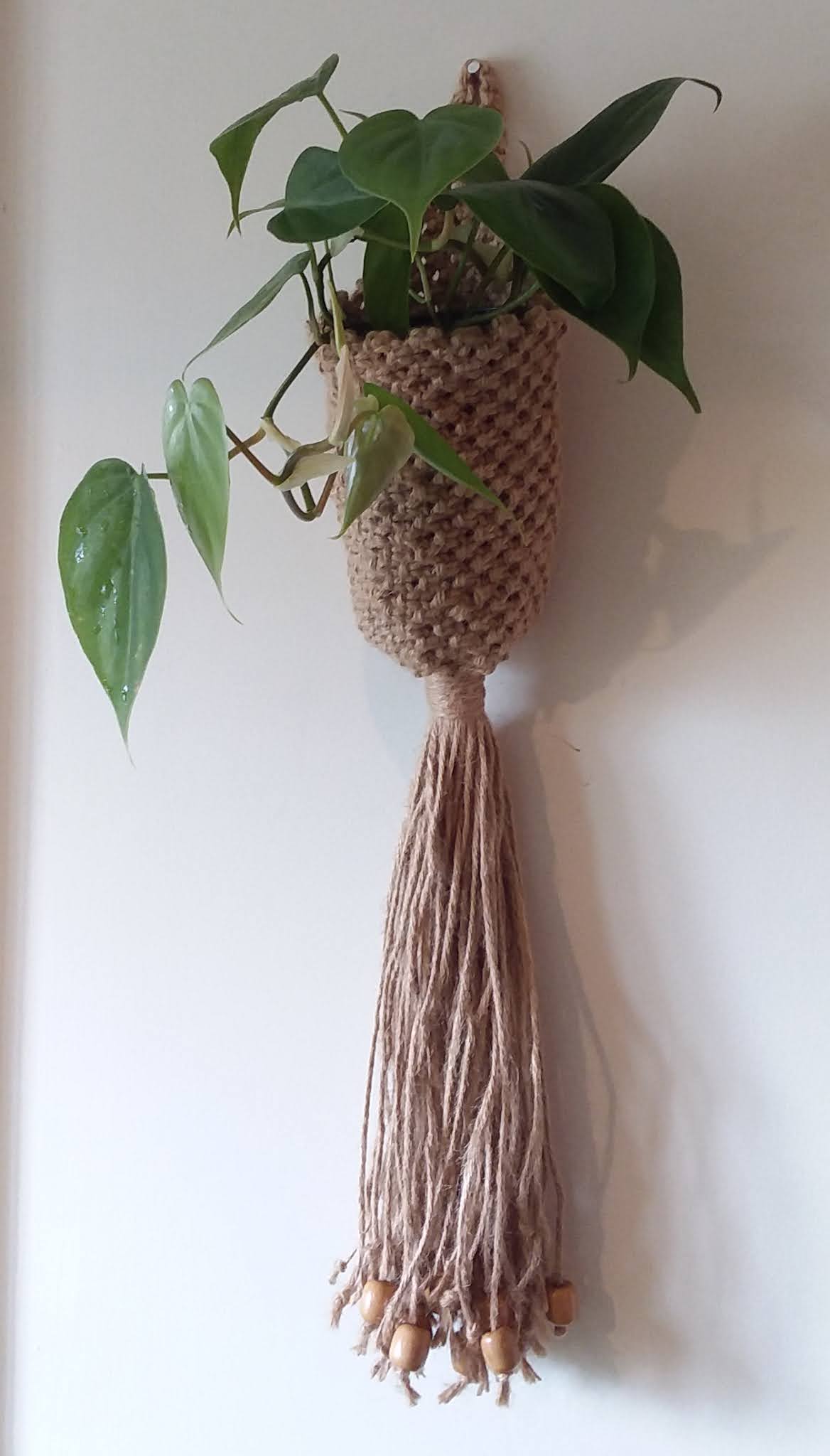
Sooner or later, I'm sure I'll move on to other hobbies. I figure by the time I run out of the remaining spools of cord, Covid cases will be on a final decline. At least I hope they will. Or maybe this is something I'll continue to do now and then. It's great hand and arm exercise, and it teaches you patience. Here are a few of my other recent projects. I'd love to read about your macramé work in the comments below. Vic





Monday, September 14, 2020

Initial Formatting for Writing a Book

This is an excerpt from The Complete Guide to Writing, Editing, Designing, and Self-Publishing Your Books, which is available on Amazon.

The Basics


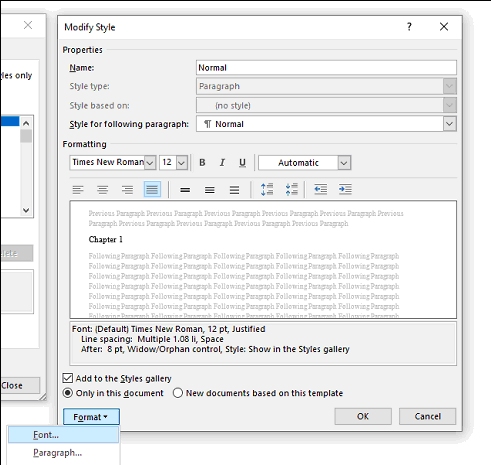
You have MS-Word open and a blank page in front of you. Hopefully you’ve written a short outline of your book by now. If you haven’t, go do that. Now change your default Normal font to Times New Roman 12 pt. To do this, go to the Home tab and right-click on the Normal style. Then select Modify. Make the change as below.


Normal is the text style for most of your book. Other styles include Heading 1, 2, 3, etc. We can alter the font of those later when formatting, but this is a great start.

Next, click on the Format drop-down box at the bottom and choose Paragraph. Choose Justified under Alignment, and .25” First line under Special. I don’t recommend having body paragraphs indented more than that. You can later use only Left and Right indents to set off special passages, like written letters, etc.


Now when you type, each new paragraph will automatically indent .25” after you hit a return. And the text will be flush on both left and right, which is how books are professionally formatted. Some paragraphs, like the first paragraph in a chapter or after a heading, you will not want indented. We’ll talk more about paragraph formatting and tables in the Formatting Your Book chapter.

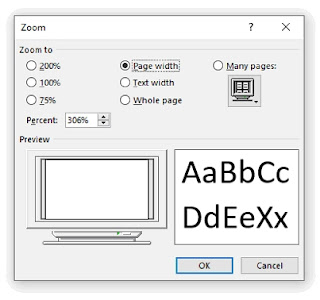
Next, set View to Print Layout and zoom percentage to Page Width so you can easily read what you type. Seeing words larger on the screen makes them seem more important. Plus it’s easier to correct mistakes.


Now begin writing. All you want to do now is get your story out. Let it flow without worry.


Initial Formatting and Punctuation

As you type, definitely bold and italicize words that you see fit. Bold is not used that often within book text, except for heading styles. Italics are used for emphasizing a word. Refrain from typing in ALL CAPS TO EMPHASIZE. The only time you should use all caps in book text is, for instance, if you are describing a sign. “He took one look at the DEAD END sign and decided to turn back.”

When you come to a new chapter, separate out the title by making it bold if you want. We’ll work on formatting those chapter headings in the Formatting Your Book section.

Avoid These Common Mistakes

I’m just going to list these because they will cause you problems later during formatting:

1. Never use the Tab key to indent. Use Paragraph formatting or Tables. I will get to that in the Formatting Your Book chapter.

2. Never use your space bar to move text. No book should have two spaces in a row. The first thing I do when formatting a book is remove all double spaces. There is no need for two spaces anywhere.

3. Do not type two spaces after a period. This is a habit learned back in typewriter days. MS-Word and most other programs automatically add a space and a half after each period.

4. Never use the Return key to move to another page. Insert a Page Break within a chapter, or a Section Break to break between chapters. The last thing you want in a book, especially an ebook, is a ton of paragraph returns to remove.

5. Stick with one color. Write in black. You can alter colors later if you intend on printing a book with interior color.


Order The Complete Guide to Writing, Editing, Designing, and Self-Publishing Your Books.

Thursday, August 27, 2020

The Happy Cigarette

From Musings of a Dysfunctional Life


It was the winter of 1992, a winter of discontent indeed. I was now living back with my father and stepmother in Western New York while trying to rebuild my financial life.

When I arrived my father told me they'd put a roof over my head and food in my stomach, but nothing else. That was fine with me, but perhaps a little bit of love and support wouldn't have hurt either. I was a successful engineer for seven years and it wasn't like I was responsible for the poor economy. Still, they had no sympathy, and my father kept referring to me as a failure. I was now living back in hell.

Up in the attic room where they stowed me, I tried to figure out how to reclaim my life. This wasn't easy to do as the room never got above fifty-five degrees. It was literally too cold to think, and I wasn't allowed to have a space heater for the possibility of "starting a fire."

I didn't have a single penny to spare—not even in the bottom of my pencil holder where stray change often finds its way. I craved a Mountain Dew, but couldn't afford to buy one. The credit card companies tracked me down and threatened to take my car away. I had only six payments left and knew that if my car was taken away, so would be my freedom.

For Christmas that year I received just socks and underwear. With the remaining gas in my car, I drove to Eastern Hills Mall in Buffalo and returned them for money to buy resume paper. That was the day I stopped in at the nearby Kinko's, saw they had an opening for a desktop publisher, and landed the minimum-wage job that would begin my recovery.

During my darkest moments I would drive away from my parents' house and spend the day anywhere else. Often I'd sit in my car in the parking lot of a shopping center. I couldn't afford to buy anything, but what I needed was more than material. I needed peace of mind.

One day I found myself in front of a K-mart. There was just a hint of snow on the ground, but the sun was out and quickly melting it away. I watched the people moving in and out.

Out of the corner of my eye I saw this teenage kid smoking a cigarette while making his way across the parking lot. I'm guessing he was around 17 or 18. It became obvious to me that he was developmentally disabled by the expression on his face and by how he walked.

It's not wrong for me to admit that I recognized this, or that it made me want to look at him longer. I think all of us do this. We look for peculiarities in others, and often those are the people who intrigue us the most. I also wanted to see that he got along safely since nobody was with him.

When he was directly in front of my car and one aisle over, he dropped his half-smoked cigarette on the ground and began to put it out. What caught my eye right away was the smile on his face. He was happy. Extremely happy. He began crushing the cigarette with his left foot over and over again. He'd twist and turn his foot several times while maintaining that beautiful smile. When he was through, he took two steps away, looked back to make sure it was out, then returned to crush it some more. Surely the cigarette was far from being a fire hazard at this point; the fragments of unsmoked tobacco and filter were already smeared about the pavement.

I wondered why he kept coming back to the cigarette. I imagined that someone had strictly warned him to make sure he put out his cigarettes when he was done. And from what I saw that day, he was darn sure he was going to follow through. I watched him return to that cigarette on the ground at least three more times.

What remains in my mind today from that incident, some seventeen years ago, was that smile. He didn't have a look of this being a bother, or that he was in any hurry. This was one moment in time that, regardless of how small, he was going to enjoy to its fullest. There was nothing to worry about.

He was free, he was on his own, and he was happy.


Sunday, July 19, 2020

Scarechi Virus Turns Cell Phones Against Users

Washington, D.C. - A newly discovered virus that only infects smartphones appears to be spreading rapidly throughout the world after its first appearance outside of Beijing, China. Named "Scarechi" for the green sign-off screens it leaves after infecting a user's phone, the virus has already caused the accidental deaths of dozens of people.


Authorities believe that the virus attached itself to an update to the popular SmoGo app, which helps citizens of China determine locations with safe, smog-free air quality. Since then it has spread to the U.K., India, and the U.S. where it is known to have killed at least sixty people.

"What the virus does is analyze a user's likes and dislikes, emails, and Internet searches, then plans various attacks," explains Marc Brenner at the Center for Smart Phone Safety. "They can range from violent and loud audio outbursts, texting people on the user's contact list, or insidiously noting emotional weaknesses in its victims, like Aashi Sarin from India who jumped to her death at the Malshej Ghat gorge where her sister had died years before."

Smartphone users are advised to read People Who Need To Die on Amazon.com to prevent their own phones from becoming infected. ;o)

Tuesday, February 11, 2020

10th RVA Environmental Film Festival (February 9, 2020)

This past Sunday was a good day. For the first time I watched one of my films on a big screen at a film festival. Who's Protecting Our National Bird? screened at the RVA Environmental Film Festival in Richmond, Virginia at the historic and absolutely gorgeous Byrd Theatre. It won the grand prize for the Virginia Film Contest.

Left to Right: Scott Burger (Co-Founder and Past President), Me, Lori Schamerhorn (Steering Committee)

My previous documentary was accepted into two film festivals: the All Sports Film Festival in Los Angeles and the ImageOut Film Festival in Rochester, New York. I couldn't afford to travel to either. I tell this story of how when it screened in LA, I celebrated by eating a Mexican pizza at Taco Bell in Manassas, VA at the time. Five years of hard work and I couldn't afford to sit with an audience of viewers who each paid $13 to see it. And as you might guess, I received none of that. Being a filmmaker is not always profitable, but you hope that your films will make a difference.

This time I chose a few local film festival venues: the RVA Environmental Film Festival and the DC Environmental Film Festival. I won't know for a few more days if this documentary is selected for the latter, so keep your fingers crossed. Here are some photos and a video from Sunday's event.


Me and my friend Bill Briscoe. Bill was a major contributor to my film and is also an eagle photographer.


Wednesday, January 15, 2020

Documentary Wins Grand Prize in RVA Environmental Film Festival Contest

(Manassas, VA) - The nature documentary "Who's Protecting Our National Bird?" has been awarded the grand prize for the Virginia Film Contest of the RVA (Richmond, Virginia) Environmental Film Festival. The mission of the RVA Environmental Film Festival is to showcase films that bring awareness to the environmental issues facing the city, region, and planet.

Now in its 10th year, the festival was founded as The Biggest Picture: Richmond’s First Environmental Film Festival under the James River Film Society. In 2011, the Sierra Club - Falls of the James Group backed the event as the RVA Environmental Film Festival. Support from the community for the festival grows with each passing year. This year the festival runs from February 7-14 and will screen twenty films around the Richmond area. The complete schedule can be found here.

Producer of the documentary, Victor Rook, writes, "I am humbled and honored to have received the award of grand prize for our documentary on the plight of bald eagles nationwide. Though they have returned in numbers, bald eagles are increasingly challenged by habitat loss as developers encroach upon their large territories. When I saw what was happening to our only eagle pair in Manassas, Virginia, I knew I had to document and investigate it. This film is a first-hand account of citizens taking on local, state, and federal agencies that are failing to protect the environment for these wonderful, majestic creatures."

Scott Burger, co-founder and past president of the RVA EFF, commended Mr. Rook in an email. "Our judges were impressed by your determination in telling this sad but important story."

The grand prize includes a check for $1000, which will be presented at the time of screening. "Who's Protecting Our National Bird?" will screen on Sunday, February 9, at the historic Byrd Theatre at 2:50 p.m. Admission to the public is free. Byrd Theatre is located at 2908 W. Cary Street, Richmond, Virginia.

DVDs for the documentary can be ordered here.

Friday, March 1, 2019

Make-a-Book March

If one of your New Year's resolutions was to get your book finished and published, I am here to help you keep that promise to yourself. And there's no better time than the present. I'm calling this month, Make-a-Book March. You'll save 20% on book design services purchased before March 31, 2020, even if you're not quite ready to submit your manuscript.

Wouldn't it be nice to have your book on someone's bookshelf? Let's make it happen.


Book Design and Publishing
Take advantage of my $550 Book Publishing Package, which includes:
  • Book Cover Design
  • Interior Formatting for Print
  • Formatting for Kindle
  • Publishing on Amazon KDP
With the 20% discount, that comes to $440. Read some of my author client recommendations. I can also proof/edit your book. Rates are based on word count. I make two passes through your manuscript and provide a pdf markup file of suggested changes.

Website/Blog Design
I also create fully-functional blogs and websites. Every author needs a platform to market their books, especially if they are self-published. And there's no better way to draw in followers than using social media and maintaining a blog.


I can work with both Blogger (recommended because of all-free hosting) and WordPress. If you already have a website or blog that needs fixing, just let me know. A four-page website (Home, Books, Blog, Contact) designed on Blogger with header artwork, book links, and subscriber form is just $250. I will even provide you with a blogging tutorial.

Marketing Materials
Yes, I am a man of many talents. I can produce bookmarks, posters, business cards, and flyers from your artwork, or the artwork I design for you. Prices vary; just let me know what you want.


Video Production
I've won three Telly Awards for my work on documentary films, and I can also whip together a nice book trailer with some flair. Check out more of my video work here.


So contact me today by email and let's get started! I'm good at holding hands and making the process run smoothly, even if it's just through emails and phone conversations. You write, and let me do the rest! Vic